

CROW CAWs: Great Horned Owl’s Road to Recovery
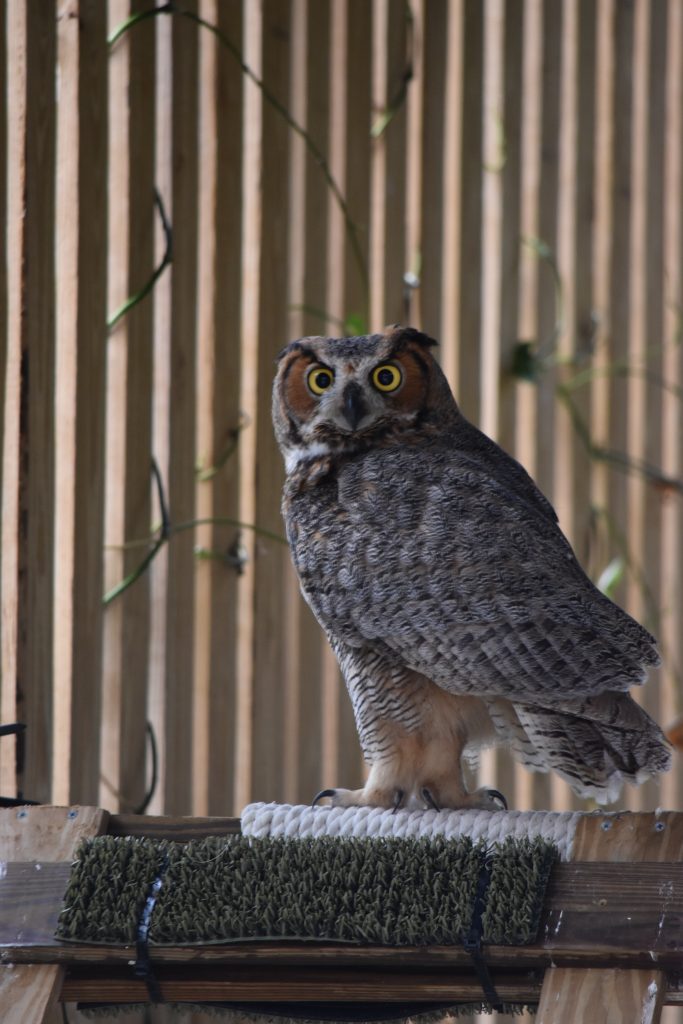
An adult Great Horned Owl (26-3637; Bubo virginianus) was recently found in Cape Coral unable to fly and was brought to CROW for care. Upon arrival, the owl was depressed and lethargic. Fortunately, a physical examination and diagnostic testing revealed no obvious fractures or signs of internal trauma.
Further examination revealed moderate corneal ulcers affecting both eyes. Combined with the owl’s altered mentation, these findings raised concern for possible head trauma.
The owl was placed on a supportive care plan that included nutritious meals, medicated eye drops, pain management, and regular ophthalmic examinations to closely monitor healing. With attentive care and a healthy appetite, the owl quickly began showing signs of improvement.
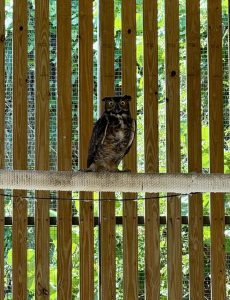
After just a few days at CROW, the owl had gained weight and become noticeably brighter and more alert. Overall, its condition greatly improved; it was ready to begin flight testing in preparation for release.
During flight testing, the Great Horned Owl demonstrated excellent strength, coordination, and endurance, confirming that it was ready to return to the wild. With its health restored, its ocular ulcers resolved, and its flight skills back in action, the owl was released back into its home territory.
We’re thrilled to see this resilient patient soaring through the skies of Southwest Florida, continuing on its journey in the wild.
More about Great Horned Owls
Great Horned Owls are a common species found in North America and parts of South America. They’re easily distinguished by the distinctive “horns,” from which they get their name. These are plumicorns, soft feather tufts that can be raised or lowered.
Great Horned Owls use plumicorns for both camouflage and communication. A Great Horned Owl with straightened, erect plumicorns is likely alert or defensive. These feather tufts break up the owl’s silhouette when perched, making it more difficult to spot.
The true ears of owls are not usually visible; they are large openings on either side of their heads covered in feathers.
Owl feathers are also structured slightly differently than most other birds. The edges of their flight feathers are soft and comb-like. This structure absorbs excess noise, allowing flight to be practically silent. This adaptation, coupled with their sensitive hearing and eyes well-suited to low light conditions, make Great Horned Owls impressive nocturnal hunters.
CROW Case A Week stories are patient features written by Jordan Bryant, CROW’s Education and Marketing Intern. These stories appear weekly in Santiva Chronicle.