CROW CAWs: Blue Jay with Broken Wing
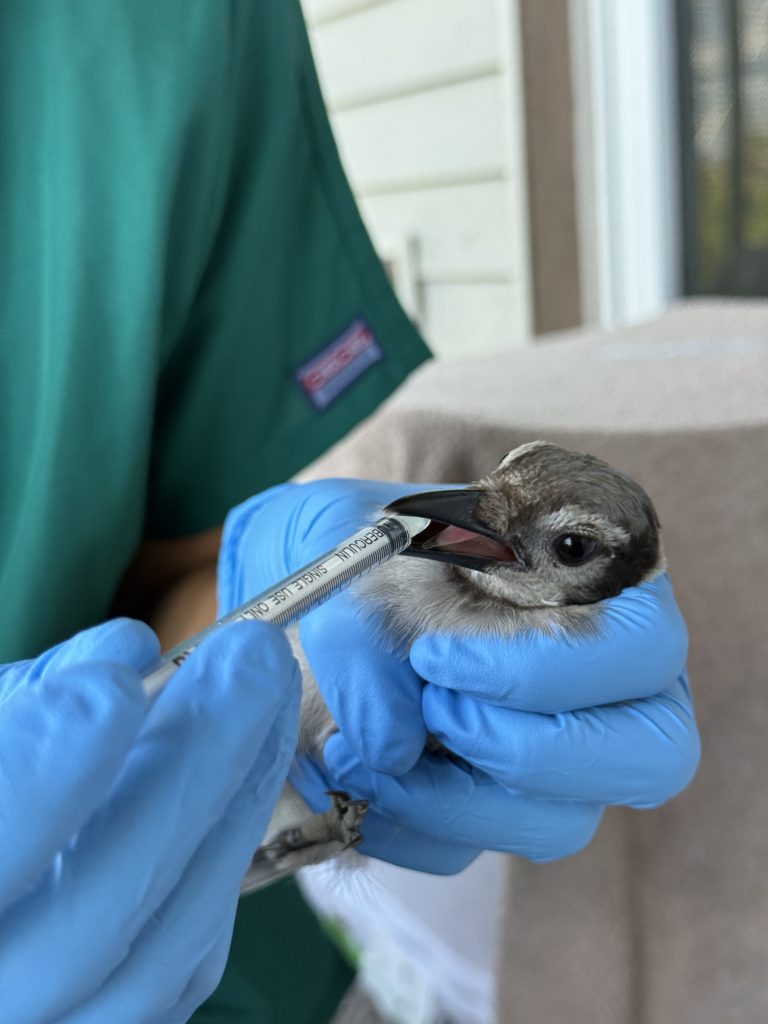
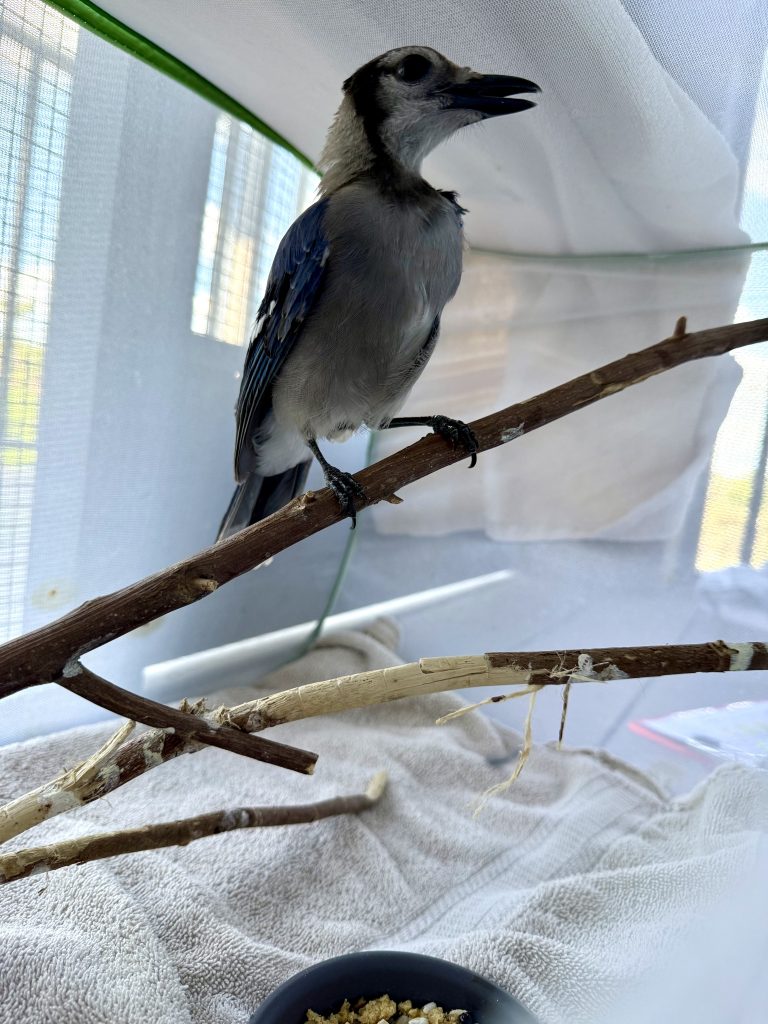
The Clinic for the Rehabilitation of Wildlife (CROW) is caring for a blue jay (Cyanocitta cristata) that was admitted with a fracture to its left wing.
Radiographs confirmed a broken ulna. To stabilize the injury and support proper healing, the veterinary team applied a figure-8 bandage to keep the wing correct alignment.
Recovery involves more than just bone healing. A major goal is maintaining normal wing function through physical therapy. Gentle stretching and massage help prevent tightening of the patagium, the thin membrane along the front edge of the wing. Because these treatments can be uncomfortable, they are often done under anesthesia to reduce stress and ensure the bird’s comfort.
Another possible complication is synostosis, where nearby bones fuses abnormally after an injury. In this case, there is a risk that the fractured ulna could fuse to the radius if movement is not carefully maintained. To prevent this and track healing, the team is performing regular exams and follow-up radiographs.
CROW’s veterinary team is encouraged by the blue jay’s progress. The fracture is healing well, and the bird is steadily regaining strength. Once fully healed, it will move to an outdoor flight enclosure to rebuild muscle and endurance before a final evaluation for release.